
For many California drivers, the smog check notice in the mail brings a small knot of worry. Will the car pass? What if it fails? How much of a hassle will it be? The good news is that most cars that fail do so for a short list of common reasons, and many of those can be found and fixed before the official test. This guide explains what a smog check is, why cars fail, the steps that help you prepare, what to do if you fail, and how a mobile mechanic can help with the diagnostics and repairs that get your car ready, whether you are searching for a smog check in Oakland or dealing with a failed smog test.
What Is a Smog Check?
A smog check is an inspection that measures how well your vehicle’s emission controls are working. California runs the program to keep harmful pollutants out of the air, and requirements depend on your vehicle’s age, type, and where it is registered. Your registration renewal notice will tell you whether a smog check is required and when it is due. The inspection is performed by a licensed smog check station, and the exact tests depend on the vehicle. In general, an inspection can include a visual check of emission control parts, a functional check of certain systems, and a check of the vehicle’s onboard computer, or a measurement of tailpipe emissions on some vehicles. For the specific rules that apply to your vehicle, check your registration notice and the state’s official smog check resources.
Why Do Cars Fail a Smog Check?
There are many possible reasons, but a handful show up again and again:
- The check engine light is on, which is often an automatic failure on newer vehicles
- The onboard computer’s readiness monitors are not ready, often because codes were recently cleared or the battery was disconnected
- A failing oxygen sensor that throws off the fuel mixture
- Worn spark plugs, bad ignition coils, or other causes of engine misfires
- A worn or failing catalytic converter
- A leak in the evaporative emissions system, such as a loose or damaged gas cap, a cracked hose, or a faulty valve
- A problem with the exhaust gas recirculation system
- Vacuum leaks, a dirty airflow sensor, or fuel system issues that make the engine run too rich or too lean
- Oil or coolant leaking into places it should not
- Missing, damaged, or modified emission control parts
Many of these start as small problems that gradually get worse. That is why regular maintenance is the best long term strategy for passing.
Step One: Deal With the Check Engine Light
If the check engine light is on, the first job is to find out why. A steady light means the computer stored a trouble code that points to a system or circuit that needs attention. A flashing light usually means an active misfire, which can damage the catalytic converter, so get it checked promptly. A code does not always tell you which part has failed, so a proper diagnosis combines the codes with live data and testing. Simply clearing the light does not help. It will usually come back, and it also resets the readiness monitors, which can lead to a failed test. Our guide to the top 10 reasons your car won’t start and how to get back on the road is a helpful read if a battery or electrical problem is part of what you are dealing with.
Step Two: Understand Readiness Monitors
On newer vehicles, the onboard computer runs a series of self tests on the emission systems and records whether each one has finished. These are called readiness monitors. If the battery has been disconnected or replaced, or if trouble codes were recently cleared, the monitors reset and need time and the right kind of driving to complete again. A car that shows monitors as not ready may be turned away from a test even if nothing is wrong. The way a vehicle completes its monitors varies, and your owner’s manual or a technician can explain what to expect. The practical tip is to avoid clearing codes or disconnecting the battery right before your appointment, and to give the car enough normal driving afterward.
Step Three: Fix Known Problems First
If you have noticed symptoms, address them before the test:
- Rough idle, hesitation, or stumbling, which can point to misfires
- Poor fuel economy that has gotten worse over time
- A gasoline smell, which can signal a leak or a rich mixture
- Dark smoke or a strong exhaust odor
- A rattling sound from the exhaust, which can mean a damaged catalytic converter
- Oil or coolant leaks
A technician can scan for codes, test the sensors and ignition parts, inspect for leaks, and recommend the repairs that make sense. Fixing the root cause is better than covering it up, since a smog test measures how the vehicle actually runs.
Step Four: Do Not Skip Routine Maintenance
A car in good mechanical shape is far more likely to pass. Keep up with the maintenance listed in your owner’s manual:
- Change the oil and filter on schedule, since dirty oil can release contaminants that affect emissions
- Replace the air filter when it is dirty, because restricted airflow can upset the fuel mixture
- Replace spark plugs at the recommended interval
- Check the cooling system, since an engine that runs too cool or too hot may not burn fuel properly
- Inspect belts, hoses, and vacuum lines for cracks and leaks
- Use the fuel grade your owner’s manual recommends
Step Five: Check the Gas Cap
The fuel system is sealed to stop vapors from escaping, and a loose, cracked, or worn gas cap can break that seal and trigger the check engine light. It is a simple thing to check. Make sure the cap clicks into place, the seal is intact, and nothing looks damaged. If the cap is worn, replacing it with the correct one for your vehicle is a small repair that can prevent a failure.
Step Six: Prepare the Car for the Day of the Test
- Bring your registration notice and any paperwork requested
- Make sure there are no warning lights on the dashboard
- Drive the car for a good stretch before the test so the engine and the catalytic converter are fully warmed up
- Follow any guidance the smog check station gives you when you book
- Do not clear codes or disconnect the battery beforehand
- Make sure fluids are at the right levels and there are no visible leaks
A warm engine runs more cleanly than a cold one, which is one reason a short drive before the test is a good habit.
How Oakland Driving Affects Emissions Parts
Everyday driving habits play a role. Stop and go traffic, short trips, and steep hills can all add wear to the engine and the emission control system. Short trips may not give the engine and exhaust enough time to warm up fully, which can allow deposits to build up. Our article on Bay Area hills and traffic and what they do to your brakes in Oakland explains how local conditions wear on your vehicle, and the same stop and go driving also affects the engine. An occasional longer drive at steady speed can help the engine reach full operating temperature and run a complete set of self checks.
What If My Car Fails?
Do not panic. A failed test is a sign that something needs attention, not the end of the road. Here is a sensible way to handle it:
- Ask for the inspection report, which lists the reason or reasons for the failure
- Have the car diagnosed so you know exactly what is wrong
- Repair the cause, and keep the paperwork and receipts
- Retest after the repair, and allow time for readiness monitors to set if codes were cleared
- Pay attention to any deadline on your registration notice, and contact the state for guidance if you need more time
California also offers programs that may help certain drivers with emissions repairs, depending on eligibility. The Bureau of Automotive Repair website explains what is available and who qualifies, and it is worth looking at if a repair is a real hardship.
Can a Mobile Mechanic Do My Smog Check?
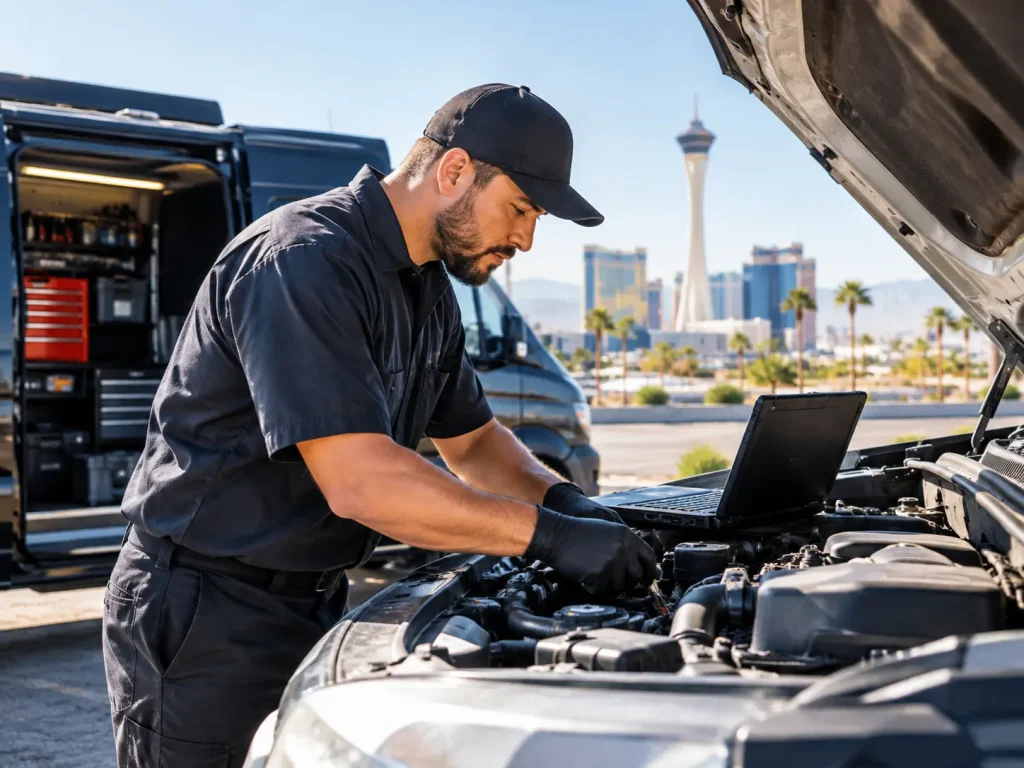
This is worth being clear about. In California, the official smog inspection is carried out at a licensed smog check station, so the test itself is done there. What a mobile mechanic can do is help you prepare and fix problems. A technician can come to your home or workplace in the Oakland area, scan for trouble codes, check for causes of a check engine light, inspect the ignition, fuel, and exhaust components, look for leaks, and handle many common repairs on site, such as spark plugs, ignition coils, oxygen sensors, and gas caps. That means you can arrive at the station with a car that is ready. Some repairs, such as a catalytic converter replacement or work that needs a lift or specialized equipment, may need a full shop, and a trustworthy technician will tell you honestly when that is the case. When you book, share your vehicle’s year, make, model, and mileage, any warning lights, and what your registration notice says.
A Quick Smog Check Prep List
- Read your registration notice for the due date and requirements
- Resolve any check engine light before the test
- Avoid clearing codes or disconnecting the battery before the appointment
- Change the oil if it is due, and keep up with other maintenance
- Check the gas cap and look for leaks
- Fix rough running, misfires, or exhaust problems
- Drive the car to warm it up before the test
- Bring your paperwork
Start Early, Pass Easier
The best time to get ready for a smog check is well before the deadline. Finding a problem early gives you time to fix it properly, to let the car complete its self checks, and to retest if needed. If your check engine light is on or the car is not running well, schedule a diagnosis now.
To learn more about our services, visit our homepage. If you would like help getting your car ready for a smog check, reach out through our contact us page and we will come to you anywhere in the Oakland area.