
Oakland asks something genuinely difficult of its drivers’ brakes. Between the steep grades climbing into the Oakland Hills along routes like Grand Avenue or Skyline Boulevard, and the dense, often gridlocked traffic that builds up on surface streets and along the approach to the Bay Bridge, this city combines two of the most demanding conditions a brake system can face. Most Bay Area drivers deal with one or the other during a typical commute elsewhere, but Oakland regularly delivers both within a single drive.
Why Combining Hills And Traffic Is Worse Than Either Alone
A steep, sustained descent demands continuous or repeated braking to control speed against gravity, generating considerably more heat than the shorter, intermittent braking typical of flat road driving. Dense stop and go traffic generates its own kind of heat and wear through frequent, repeated stops. Oakland drivers navigating a route that includes both, descending from the hills into heavy traffic near downtown or the MacArthur corridor, experience these two demands stacked on top of each other rather than one at a time, meaning brakes rarely get a real chance to cool down between the grade related braking and the traffic related braking that follows immediately after.
This compounding effect means a commute involving both hills and dense traffic can wear down brake pads considerably faster than the same total distance covered on either a purely hilly route or a purely flat, congested one, since the brakes are essentially being asked to do double duty throughout the entire drive rather than facing one demanding condition at a time.
How Oakland’s Specific Geography Makes This Worse
The transition from the Oakland Hills down into the flatter parts of the city happens over a relatively short distance in many neighborhoods, meaning drivers often go from a steep, continuous descent directly into dense urban traffic without much of a buffer in between. This lack of transition space means brakes that have already generated significant heat during the descent immediately face another round of demand from stop and go conditions, rather than getting a stretch of easier driving to cool down first.
Traffic feeding toward the Bay Bridge adds another layer during peak commute hours, since this congestion tends to be dense and sustained rather than brief, meaning drivers who have just come down from the hills often sit in this kind of heavy traffic for an extended period immediately afterward.
Signs Oakland’s Combination Is Wearing Down Your Brakes
A high pitched squealing sound from a brake wear indicator often shows up sooner for Oakland commuters navigating this combination than it would for a driver with an equivalent commute distance on flatter, less congested roads. A burning smell after a descent followed by heavy traffic, or a brake pedal that feels softer than usual, suggests the brakes have absorbed more heat than they can comfortably dissipate and should be checked before continuing to drive through similar conditions.
A brake pedal that feels different depending on how recently you descended from the hills is also worth paying attention to. Some drivers notice their brakes feel slightly less responsive specifically after a hill descent followed immediately by traffic, even if the same brakes feel completely normal during a flatter, less demanding drive later in the day. This kind of condition dependent symptom is a useful clue that heat buildup from the compounded strain, rather than simple overall wear, may be the more immediate concern.
Grinding noises indicate a more advanced stage of wear, where pad material has worn down enough that metal is beginning to contact metal, a considerably more expensive situation than catching thinning pads early. If you have experienced a starting issue that seemed to develop after a demanding commute through Oakland’s hills and traffic, our guide on the top 10 reasons your car won’t start and how to get back on the road covers a range of causes worth ruling out alongside any brake concerns you may be noticing.
Why Oakland Drivers Should Check Brakes More Often
Standard brake inspection intervals are generally built around average driving conditions, which do not fully account for the combined strain that Oakland’s hills and traffic add together. Drivers who regularly navigate both conditions in a single commute should consider having brakes checked every six months rather than waiting for an annual service visit, particularly if their route includes a descent from the hills directly into dense traffic near downtown or the bridge approaches.
Driving Habits That Help Reduce This Compounded Strain
Downshifting to a lower gear during a steep descent, when your vehicle allows for it, uses engine braking to help manage speed rather than relying entirely on your brake pads, which reduces some of the heat buildup before your brakes even face the traffic conditions waiting at the bottom of the hill. Allowing extra following distance in traffic, particularly right after a descent when brakes may already be running warmer than usual, gives you room for smoother, more gradual braking rather than sudden, hard stops that generate additional heat on top of what the hill already produced.
Timing your commute to avoid the heaviest overlap between descent traffic and bridge approach congestion, when your schedule allows for some flexibility, can meaningfully reduce how often your brakes face this compounded demand. Even shifting a commute by fifteen or twenty minutes sometimes makes a noticeable difference in how much stop and go driving follows immediately after a descent from the hills, which adds up over the course of many repeated commutes throughout the year.
Why A Mobile Mechanic Fits Oakland’s Driving Reality
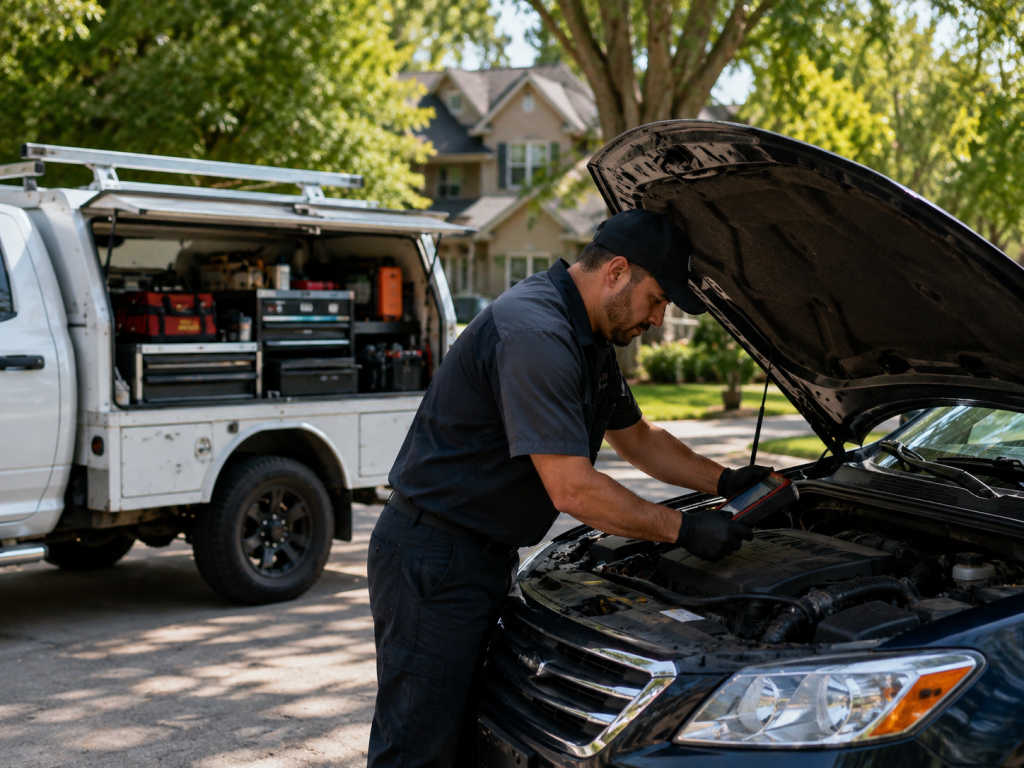
Given how much extra strain this combination of hills and traffic places on brake systems, having a technician familiar with Oakland’s specific driving conditions come directly to your home or workplace offers a real advantage. A mobile mechanic can inspect pads, rotors, and brake fluid condition right where your vehicle is parked, catching wear that this compounded strain accelerates before it turns into a more serious and expensive repair.
We covered the broader benefits of this approach in our article on why mobile mechanics are better than traditional auto shops in Oakland, which explains how convenience and local familiarity come together, particularly useful for the kind of frequent brake maintenance that Oakland’s combination of hills and traffic tends to require.
Stay Ahead Of What Oakland’s Hills And Traffic Do To Your Brakes
Oakland’s combination of steep terrain and dense urban traffic is part of what makes commuting here more demanding on brake systems than a typical Bay Area drive elsewhere. Paying attention to early warning signs, adjusting driving habits on descents that lead directly into heavy traffic, and having brakes checked more often than the standard schedule suggests are all simple ways to stay ahead of the extra wear this specific combination causes.
If it has been a while since your brakes were inspected, visit our homepage to learn more about our services, or reach out through our contact us page to schedule a visit at your home or office anywhere in the Oakland area.
A little extra attention now can help your brakes keep up with everything Oakland’s hills and traffic ask of them every single day.